
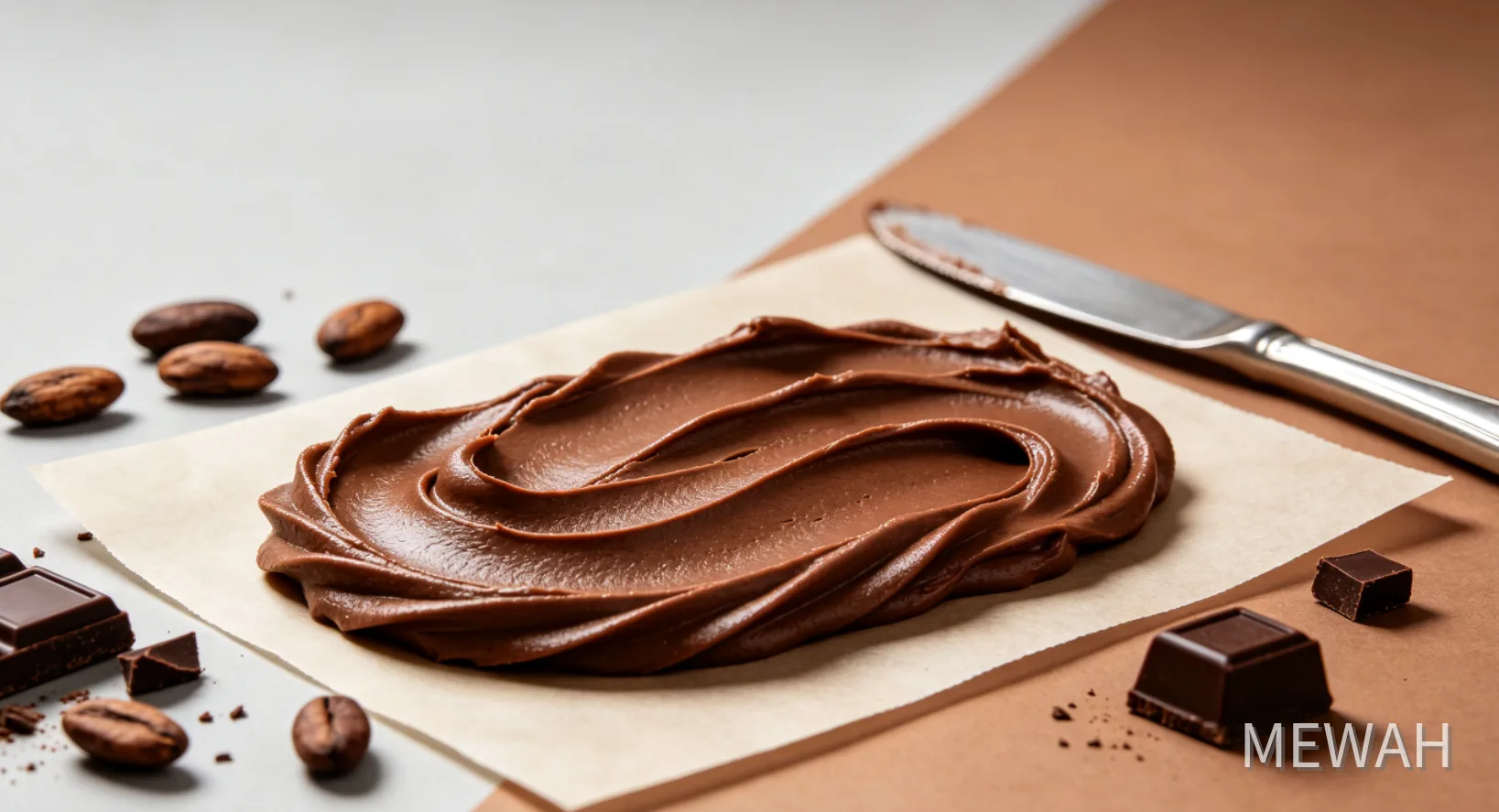
The triglycerides in natural cocoa butter are highly symmetrical, and they can crystallise into six distinct forms, numbered I to VI. Only form V gives the gloss, the snap and the clean melt that make good chocolate — and it does not form preferentially on its own. Tempering, a precise cycle of heating, cooling and holding, is what seeds enough form-V nuclei. Get it wrong and the product comes out dull, soft or bloomed.
A cocoa butter substitute takes a different route. Built on palm kernel oil and then fractionated and interesterified, its triglycerides are dominated by lauric acid and are structurally far more uniform, crystallising into essentially one stable form, β′. With no competing polymorphs there is nothing to temper for: cool it properly and gloss and clean release follow.
What that means on the line
- No tempering machine, so both capital cost and maintenance drop sharply
- A wider process window, and less dependence on operator experience
- Shorter cooling times, so line speed can go up
- The trade-off: it cannot be labelled as chocolate, and should not be blended with cocoa butter in any significant proportion
That last point deserves emphasis. The crystal forms of CBS and cocoa butter are incompatible, and blending them lets each interfere with the other's crystallisation — the product turns soft, blooms, or loses gloss. Where a cocoa note is wanted, low-fat cocoa powder is the right ingredient, not cocoa butter.