
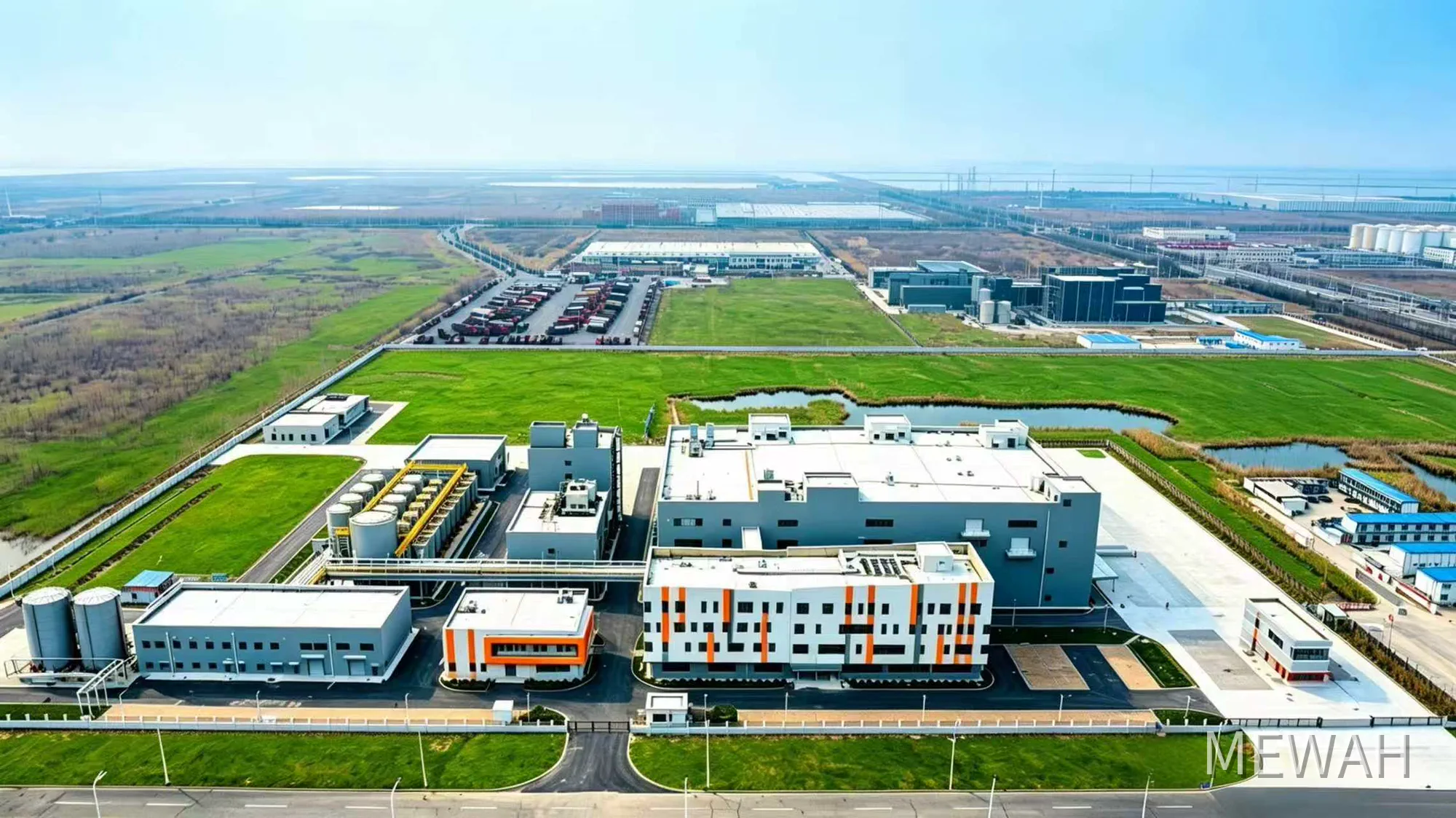
The Tianjin plant occupies some 168,872 m² and produces 100,000 tonnes a year. What lets it take on everything from commodity fats to premium bespoke formulations is a closed loop running from refining through interesterification and chilling-and-kneading to packing: subcontract any one stage and both quality and lead time stop being controllable.
First: refining, which sets the purity of the base oil
The refining line runs degumming, deacidification, bleaching and deodorising under full automation. This stage does not create flavour, it removes it: phospholipids, free fatty acids, pigments and volatile off-notes have to be separated here, because nothing downstream can compensate for what is left behind. The stability of the base oil is what sets the finished product's shelf life.
Second: interesterification, rearranging the molecules
Interesterification is the dividing line for specialty fats. Rearranging where fatty acids sit on the glycerol backbone changes the melting curve and crystallisation behaviour without resorting to hydrogenation. The plant works chiefly by chemical interesterification, which is economical and suits high-volume standard grades; combined with precise formulation it also serves premium applications that need a tightly controlled melting range — a cocoa butter substitute matching the melting curve of natural cocoa butter, for instance.
Third: chilling and kneading, where texture is made
The same formulation, cooled along a different curve, can finish anywhere between brittle and slumping. The chiller drops the fat from melt to crystallisation temperature in tens of seconds, and the multi-stage kneader that follows applies controlled shear so the crystals stay small and uniform. This is what decides whether pastry margarine stretches with the dough during sheeting, and whether filling margarine whips to a fine cell structure.
Fourth: packing, which has to fit your line
- Cartons (25 kg, lined) and 25 kg pails, which suit most bakery production rooms
- Bag-in-box (BIB) for smaller packs of liquid fat
- 200 kg drums for medium-batch continuous production
- IBC totes where liquid fat is piped into the process
- Bulk road tankers at 25 tonnes per load, for high-volume manufacturers
Owning every step from sourcing to filling means a customer deals with one accountable party — and both lead time and quality stay predictable.